The Rights of Safe Medication Administration (and How the NCLEX Actually Tests Them)
You know the classic Five Rights: right patient, right drug, right dose, right route, right time. So why do you still miss medication-safety questions on practice tests?
Because the NCLEX rarely asks you to recite the rights. It asks you to catch the error — an order that looks fine until you check it against the patient in front of you. Pharmacological and Parenteral Therapies is one of the most heavily weighted areas of the 2026 NCLEX-RN test plan (13–19% of items), and it tests medication safety as clinical judgment, not recall. Here is the habit that turns those questions from traps into easy points.
Read the order, then read the patient — in that order
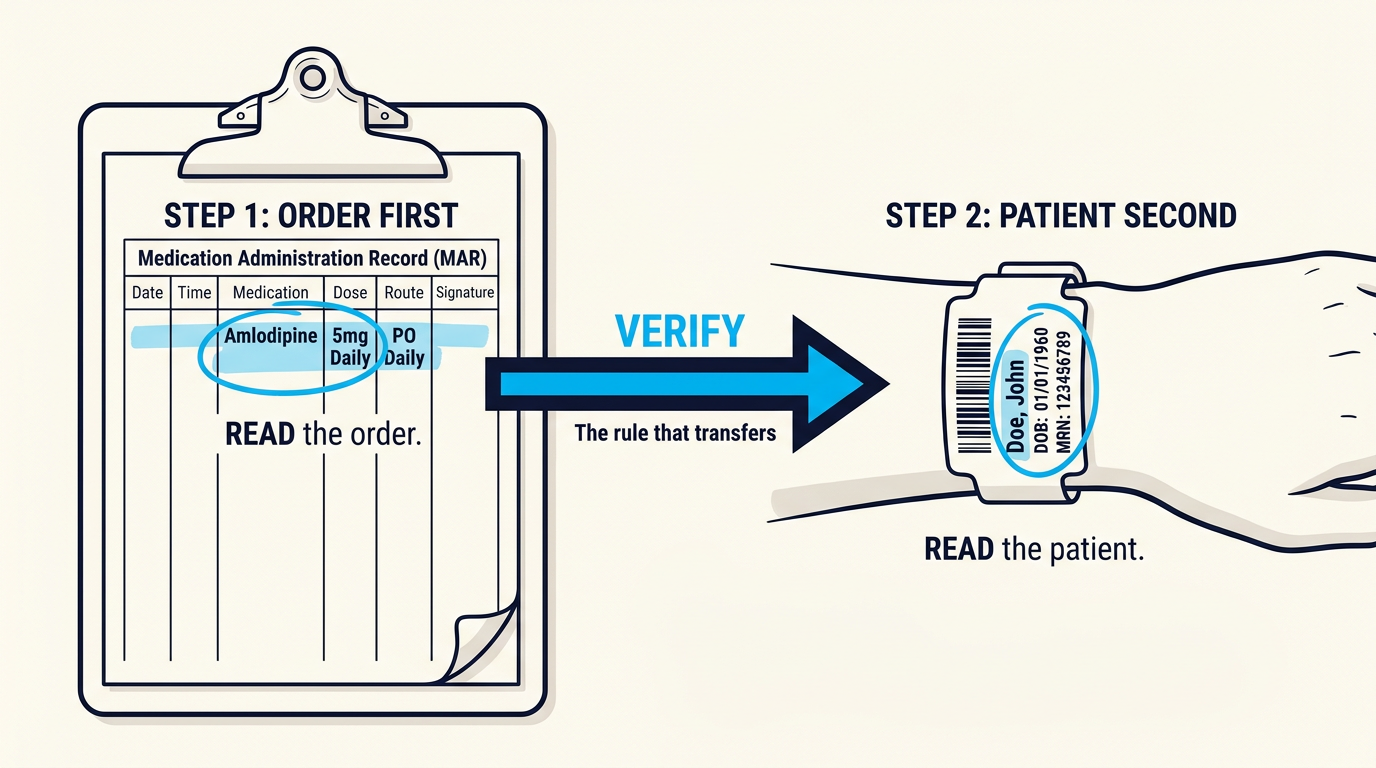
The mistake most students make is answering the drug question in a vacuum. The stem gives you an order ("administer metoprolol 50 mg PO"), and you confirm the dose looks normal and move on. The exam is betting you won't look at the assessment data sitting right above it: heart rate 48, blood pressure 88/52.
Safe administration on the NCLEX is a two-step check. First, the Rights confirm the order matches the plan. Second — and this is where points are won — you ask whether it's still safe for this patient right now. A correct dose of a beta-blocker is still the wrong action when the patient is already bradycardic and hypotensive. You hold it and notify the provider.
The rule that transfers: before you give any medication in a question, glance at the vitals, labs, and assessment cues. The distractor they want you to pick is almost always "give the drug as ordered."
Get free NCLEX-RN study tips
The highest-yield NCLEX-RN prep, in plain English, a few minutes a week.
By subscribing you agree to receive emails from HLT Mastery.
- Weekly, never noisy
- One short email a week — the highest-yield concept to review and a practice question to test yourself.
- No spam, no sharing
- Prep for your exam. Unsubscribe in one click, and we never share your email.
The three high-alert habits worth memorizing
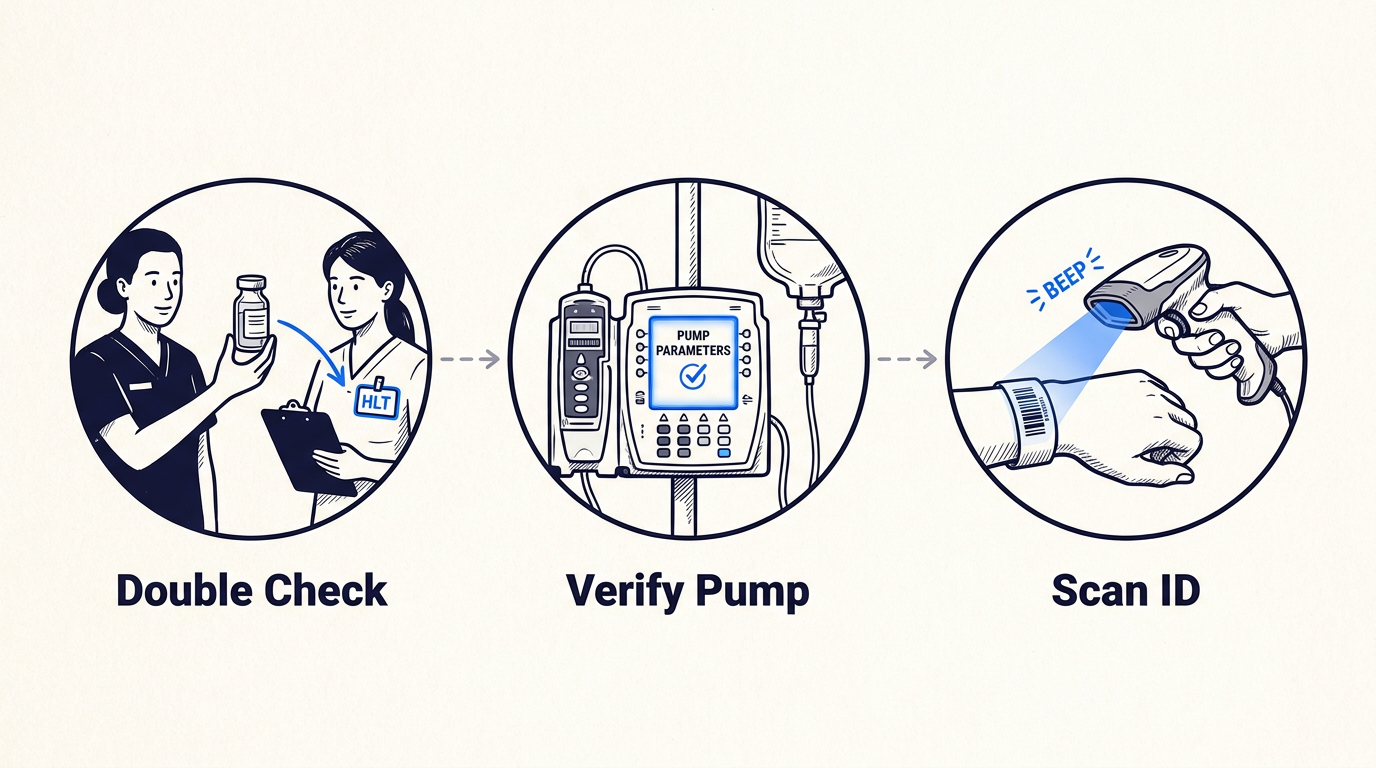
Most medication-safety points come from a small set of reasoning checks. Master these three and you cover most of what the exam asks.
- Verify before high-alert drugs. Anticoagulants (heparin, warfarin), insulin, and opioids demand an extra check — a second nurse, a lab value, or a baseline assessment — because the harm from an error is severe. When you see one of these, expect the question to test a verification step, not the drug fact itself.
- Never IV push potassium. It can stop the heart, so it's always diluted and infused slowly. If that one surprises you, you're not alone — it's one of the highest-yield safety facts on the exam.
- Assess before, act after. Many med-safety items hinge on a required assessment: apical pulse before digoxin, blood pressure before an antihypertensive, blood glucose before insulin. The safe answer collects the cue first.
Slow down on dosage calculation — it's a confidence problem, not just a math problem
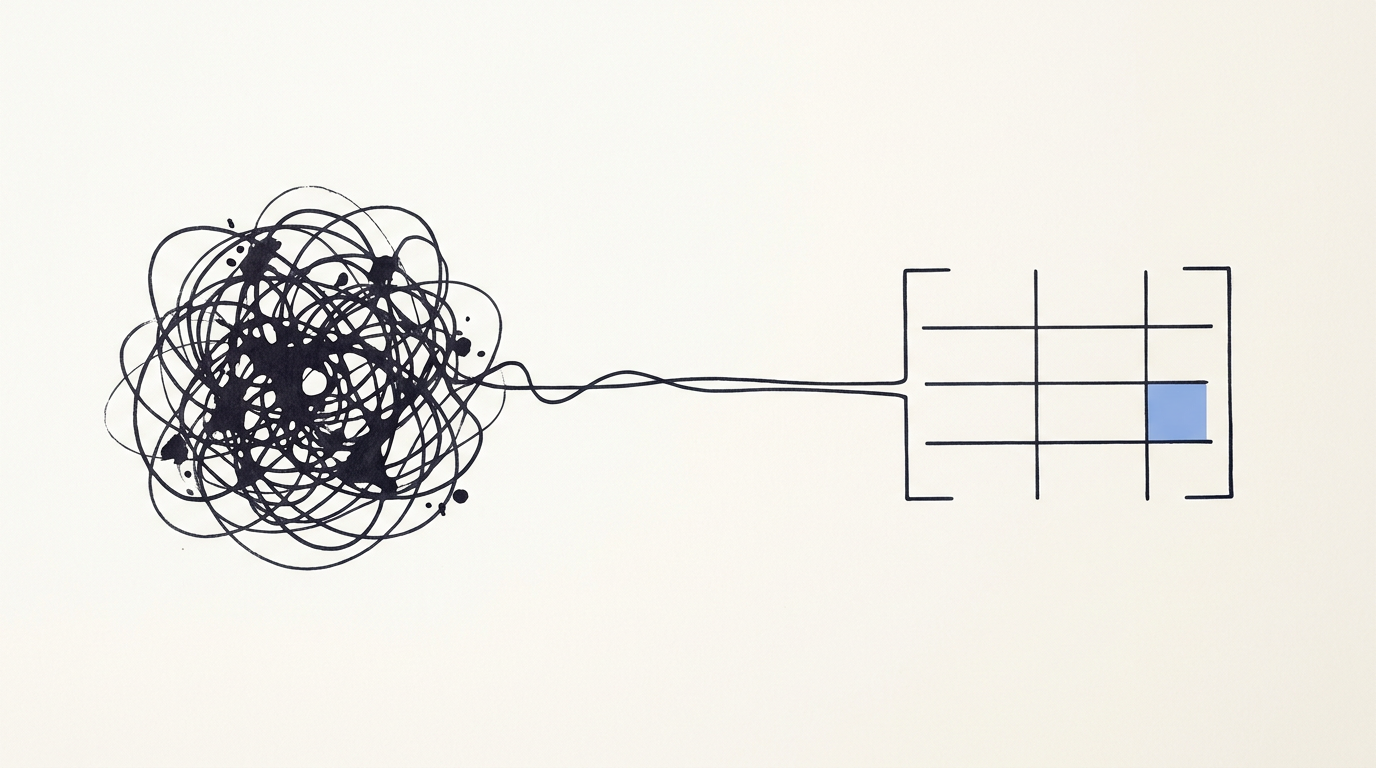
Dosage-calc items feel scary because a misplaced decimal is a real patient-safety error. Use one repeatable method every time: label every number with its unit, set up the conversion so the unwanted units cancel, confirm the leftover unit matches what the question asks before you do any arithmetic, then check that the final dose is clinically plausible. A dose that comes out as 40 tablets is a signal you made an error, not an answer.
Practice it the way memory actually works
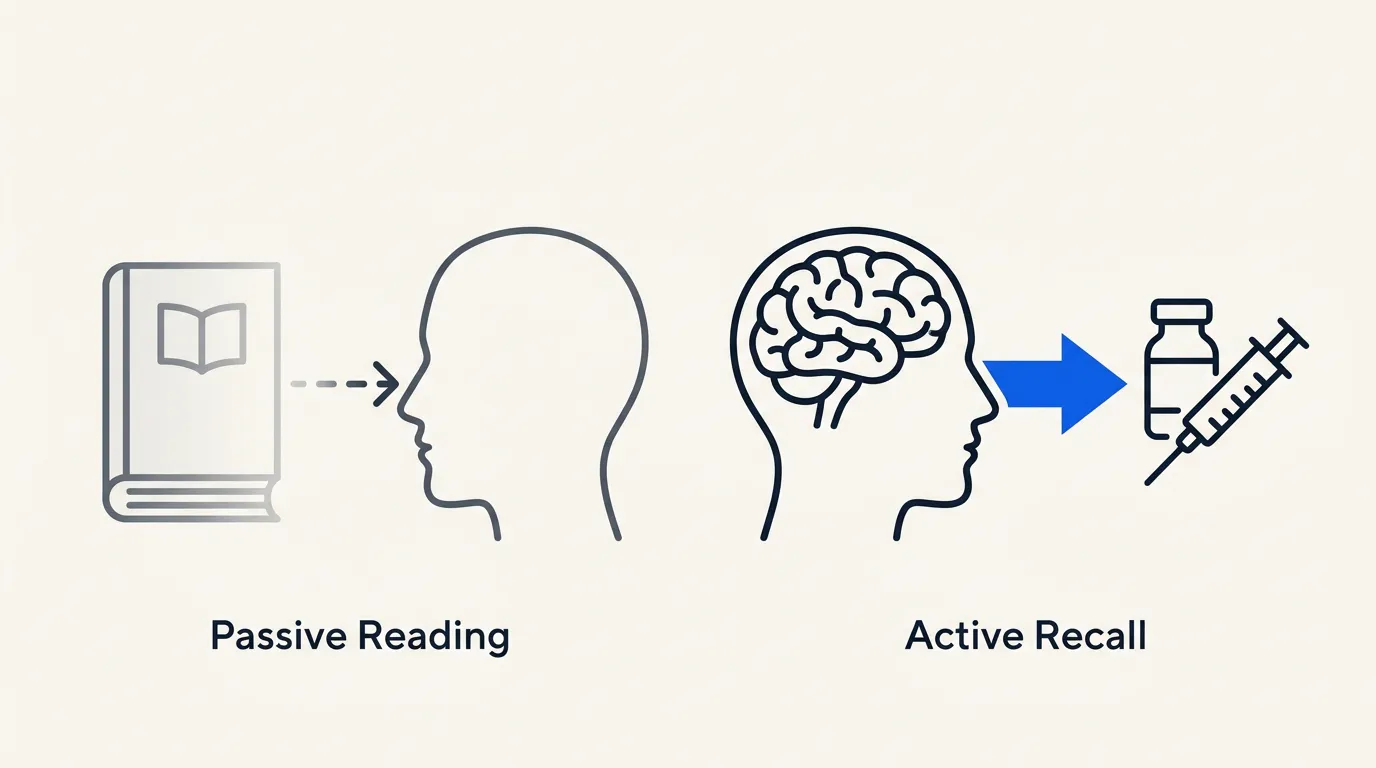
Re-reading the Five Rights feels like studying. It isn't. You lock in medication safety by retrieving the reasoning — closing the notes, working a real question, committing to an answer, and then reading why each wrong option was tempting. Space those reps out over days rather than cramming them into one block, and mix medication questions in with other topics so you have to recognize the situation without being told the category. That discomfort is the learning.
When you finish a medication question, don't just check right or wrong. Name the cue you missed: knowledge gap, prioritization error, or the classic distractor trap of giving the drug when the patient's vitals said hold. That one habit is what moves the needle on test day.